How I Discovered Futoshiki Puzzles and Got Completely Hooked
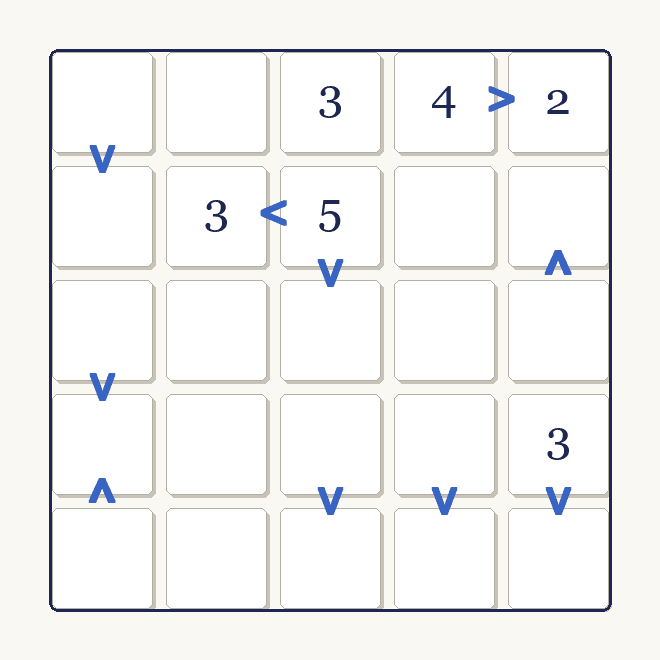
I thought it would take five minutes. Instead, my first Futoshiki puzzle took half an hour and sent me down a rabbit hole of logic, deduction, and puzzle creation.
A few nights ago I was doing what puzzle enthusiasts often do: wandering around the internet looking at Sudoku variants, logic puzzles, and brain teasers that promised to be just a little more challenging.
That's when I stumbled across something called Futoshiki.
At first glance it looked simple. A grid. A few numbers. A handful of inequality signs.
Five minutes, I thought.
Then I'll move on.
The 5-Minute Stare
I opened a 6×6 puzzle and started looking for obvious moves.
I could eliminate a few possibilities. I understood the rules. Every row and column needed unique numbers, and the inequalities provided additional clues.
Yet somehow the puzzle refused to budge.
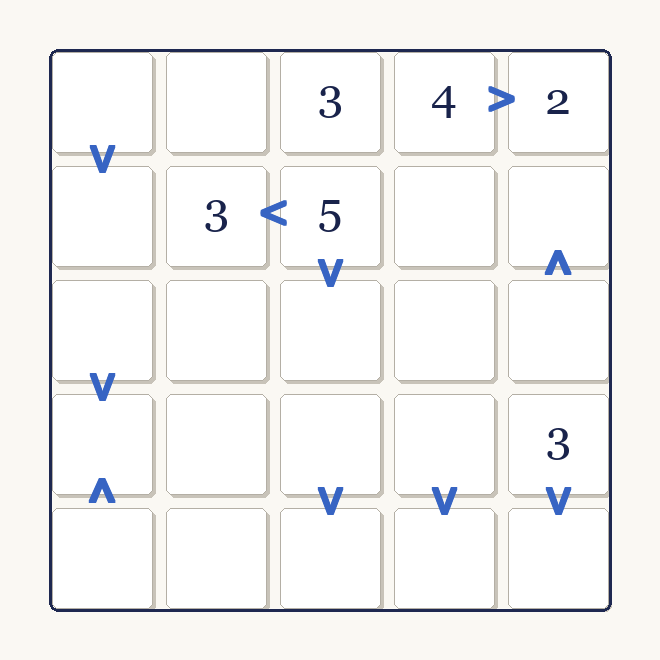
The puzzle that started it all.
After a while I became convinced that something had to be wrong with the puzzle.
So I gave it to ChatGPT.
The AI Challenge
ChatGPT solved it.
And that irritated me far more than it should have.
My immediate reaction was simple:
'There is no way I am letting AI beat me at this.'
So I went back to work.
Thirty minutes later, after plenty of crossed-out notes and second guesses, I finally solved my first Futoshiki puzzle.
And surprisingly, I loved every minute of it.
What Makes Futoshiki Different?
Futoshiki is built on a simple idea.
- Every row contains unique numbers.
- Every column contains unique numbers.
- Inequality signs tell you which neighbouring cells must be larger or smaller.
The rules take less than a minute to learn.
The challenge comes from combining those rules and slowly narrowing down possibilities through deduction.
It feels like Sudoku's more stubborn cousin.
From Solving Puzzles to Building Them
After solving a few puzzles I wanted more.
Then I wanted harder ones.
Then, being a programmer, I made the classic mistake of deciding to build my own.
I spent the next week creating a puzzle generator capable of producing Futoshiki puzzles of different sizes and difficulties.
The goal wasn't simply to generate random grids.
I wanted puzzles that felt rewarding, logical, and enjoyable for human solvers.
The Harder Puzzles
One thing I quickly learned is that Futoshiki difficulty is surprisingly flexible.
A beginner puzzle may have more starting numbers and fewer inequalities.
A harder puzzle often gives you very little information and forces you to combine multiple deductions before progress appears.
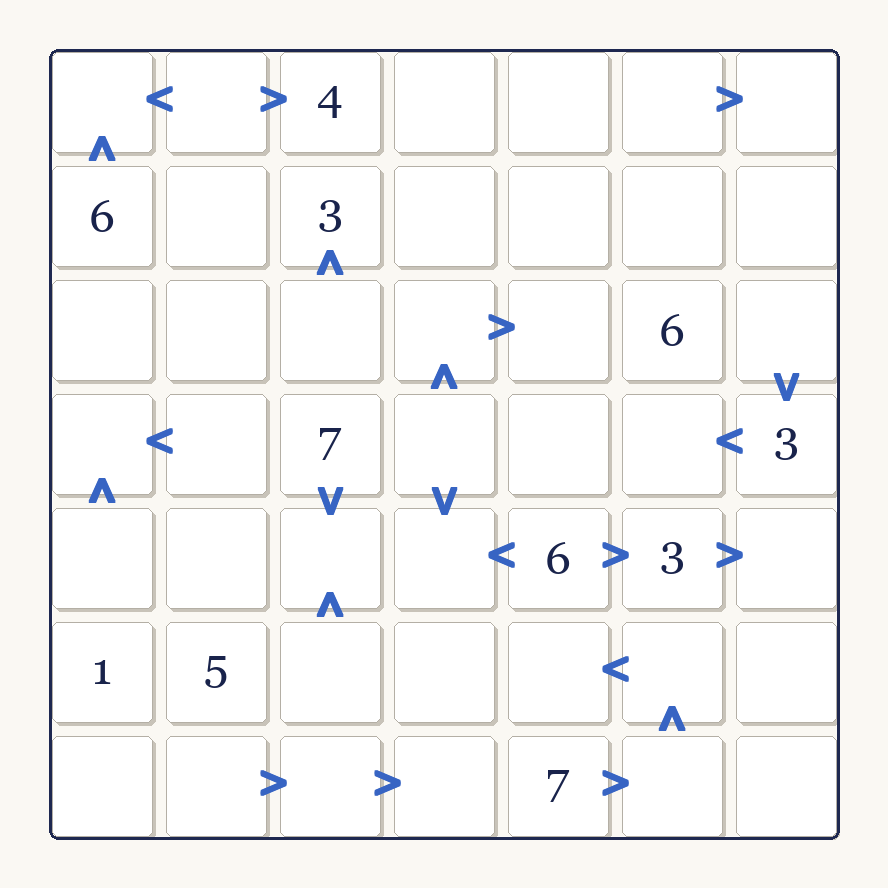
Easy and hard puzzles often differ dramatically in how much information they reveal upfront.
The best part is that every solution still comes from logic rather than guessing.
The Puzzle I Wish I'd Found Earlier
I genuinely wish I had discovered Futoshiki during my school years.
Not because it teaches mathematics directly.
But because it teaches a style of thinking.
You learn to test assumptions, eliminate possibilities, hold multiple constraints in your head, and patiently work toward a solution.
Those are useful skills regardless of age.
Which is why I don't think Futoshiki is only for kids or only for adults.
It's for anyone who enjoys figuring things out.
A Free Collection of Futoshiki Puzzles
After generating and testing hundreds of puzzles, I selected 50 of them and created a free printable puzzle pack.
Some are gentle introductions.
Some are genuinely challenging.
All of them are designed to reward careful logical thinking.
Download, print, and solve at your own pace.
If you decide to try them, I'd love to hear your own Futoshiki story.
How long did your first puzzle take?
Did you solve it quickly?
Or did you stare at it for five minutes like I did?
Ready to try? Download the free Futoshiki puzzle pack and see whether your first puzzle takes five minutes or thirty.