A Jigsaw Sudoku, a Stranger, and the Flight I'll Never Forget
How an unfinished Jigsaw Sudoku puzzle turned a routine flight into an unexpected conversation and changed how I think about puzzles forever.
A few years ago, while I was just beginning my journey into puzzle publishing, I had an experience that completely changed how I think about puzzles.
I was on a flight when I noticed that the young woman sitting next to me was solving a Sudoku puzzle on her phone. Being a puzzle enthusiast, I couldn't resist starting a conversation. I asked whether she had ever tried any Sudoku variations. Like many people, she knew the classic version but hadn't explored much beyond it.
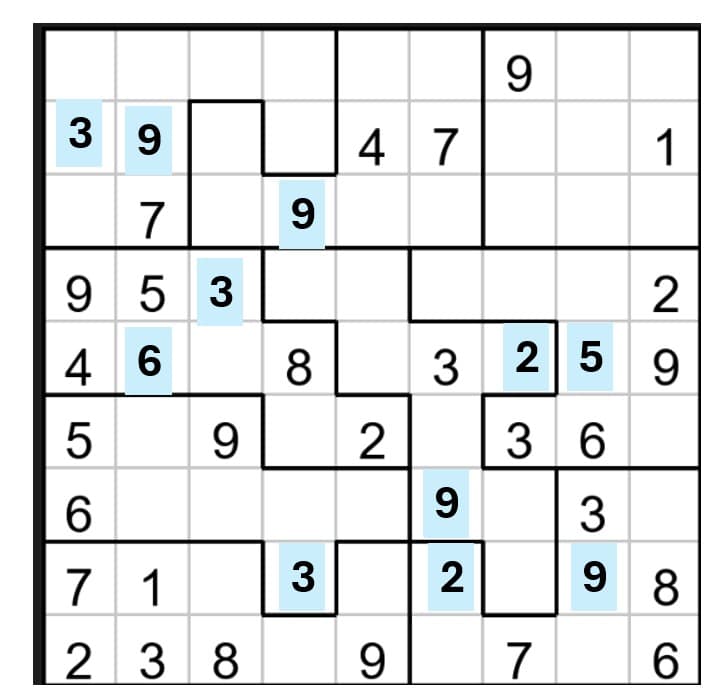
By coincidence, I had a few sample puzzles saved on my laptop. I opened one and showed her a Jigsaw Sudoku. The rules were familiar, but the irregular regions made it surprisingly challenging. Curious, she agreed to give it a try.
An Unexpected Collaboration
What happened next was something I hadn't expected.
Instead of simply looking at the puzzle, we both became invested in solving it. One clue led to another. We discussed possibilities, challenged assumptions, and occasionally discovered that an idea we were convinced would work had quietly led us down the wrong path.
For nearly an hour, the puzzle became our shared focus. The flight seemed shorter. The conversation felt effortless. We were simply trying to figure out where a number belonged inside an oddly shaped Sudoku region.
As the flight prepared to land, we looked back at the puzzle and laughed. Despite all our effort, we still hadn't solved it completely. Before leaving, I took a snapshot of the partially completed puzzle and shared it with her.
The puzzle remained unfinished, but the experience stayed with me.
Seeing Puzzles Differently
Later, I found myself reflecting on why the interaction had felt so natural. Two strangers had spent almost an hour talking, thinking, and collaborating without any awkwardness. We didn't need to search for topics. The puzzle itself gave us something to explore together.
That was the moment I began to see puzzles differently.
Most people think of puzzles as solitary activities, but they can also be social experiences. A puzzle creates a shared objective. It encourages curiosity, discussion, and collaboration. Sometimes it even creates memories that last longer than the solution itself.
The Puzzle Journal Idea
That realization eventually led me to another idea: what if puzzle books could also become journals?
Imagine carrying a small pocket-sized puzzle book while traveling. On one page is a puzzle waiting to be solved. On the facing page is space to capture a memory, a thought, or a story from the journey. Perhaps you note the city you were visiting, the café where you stopped for coffee, or the train ride during which you solved that puzzle.
Years later, when you open the book again, the puzzle is still there. But alongside it is something even more valuable—the memory connected to it.
The puzzle becomes a timestamp.
More Than Just Numbers
Whenever I think back to that flight, I don't remember the exact puzzle or even how close we came to solving it. What I remember is the conversation, the collaboration, and the realization that a simple puzzle had managed to connect two strangers for a brief moment.
Perhaps that is one of the most overlooked qualities of puzzles.
They challenge our minds, but sometimes they also connect our stories.
If you enjoy Sudoku variations, logic puzzles, and thoughtful challenges, you may also enjoy exploring some of the puzzle books and puzzle experiences that grew out of moments like this one.