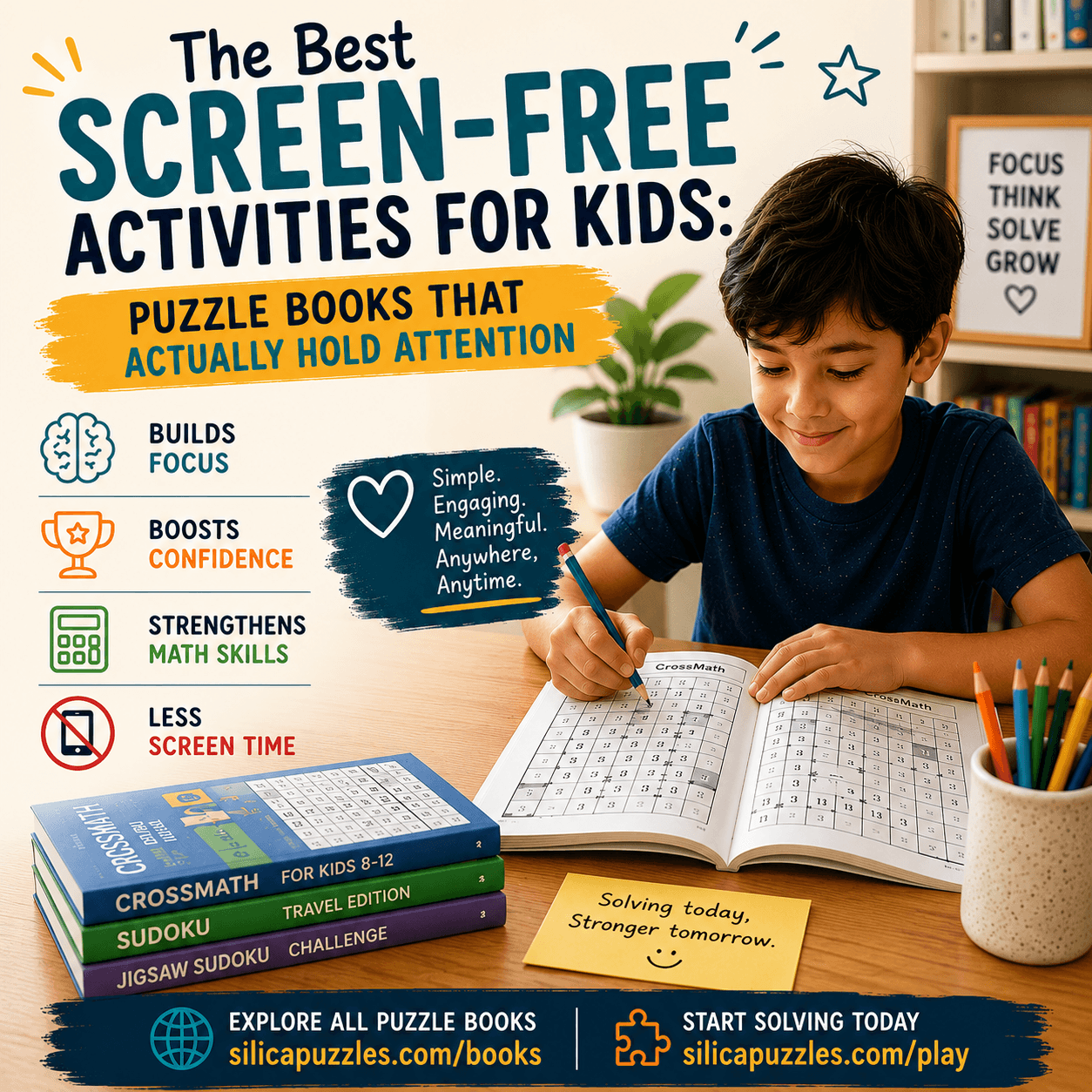
How to Teach Kids Math Without Stress: 7 Strategies That Actually Work
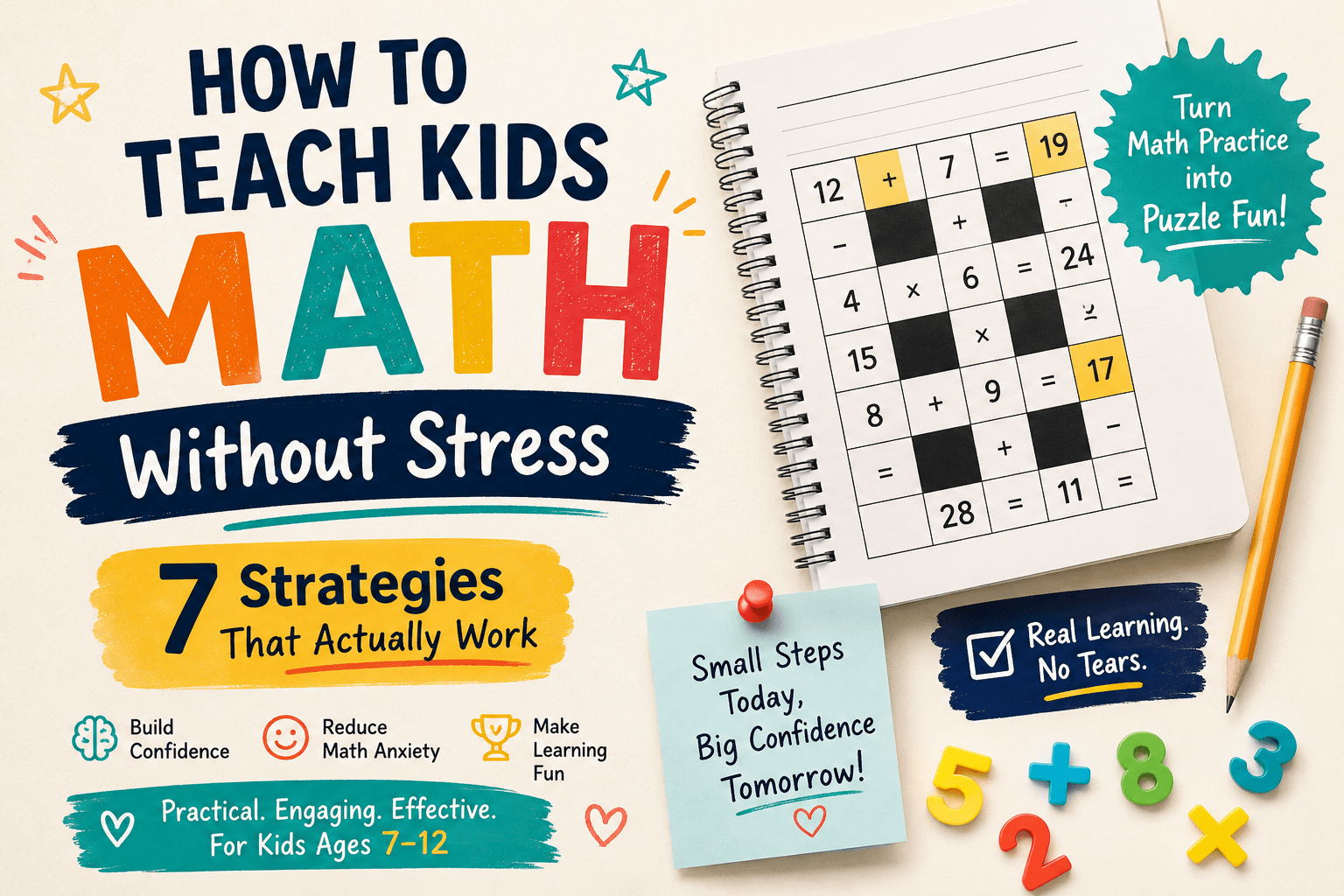
Want to teach kids math without stress, tears, or frustration? Discover 7 practical strategies that build confidence, reduce math anxiety, and make learning feel more like play than homework.
There is a moment most parents recognise.
Your child sits at the kitchen table, maths homework in front of them. You sit beside them, patient at first, explaining and re-explaining. Then something shifts. Their eyes glaze over. They start crying. Or worse, they shut down completely and say: “I'm just bad at maths.”
First: Understand What You're Really Fighting
When a child struggles with maths, the instinct is to add more practice. More worksheets. More drills. More repetition.
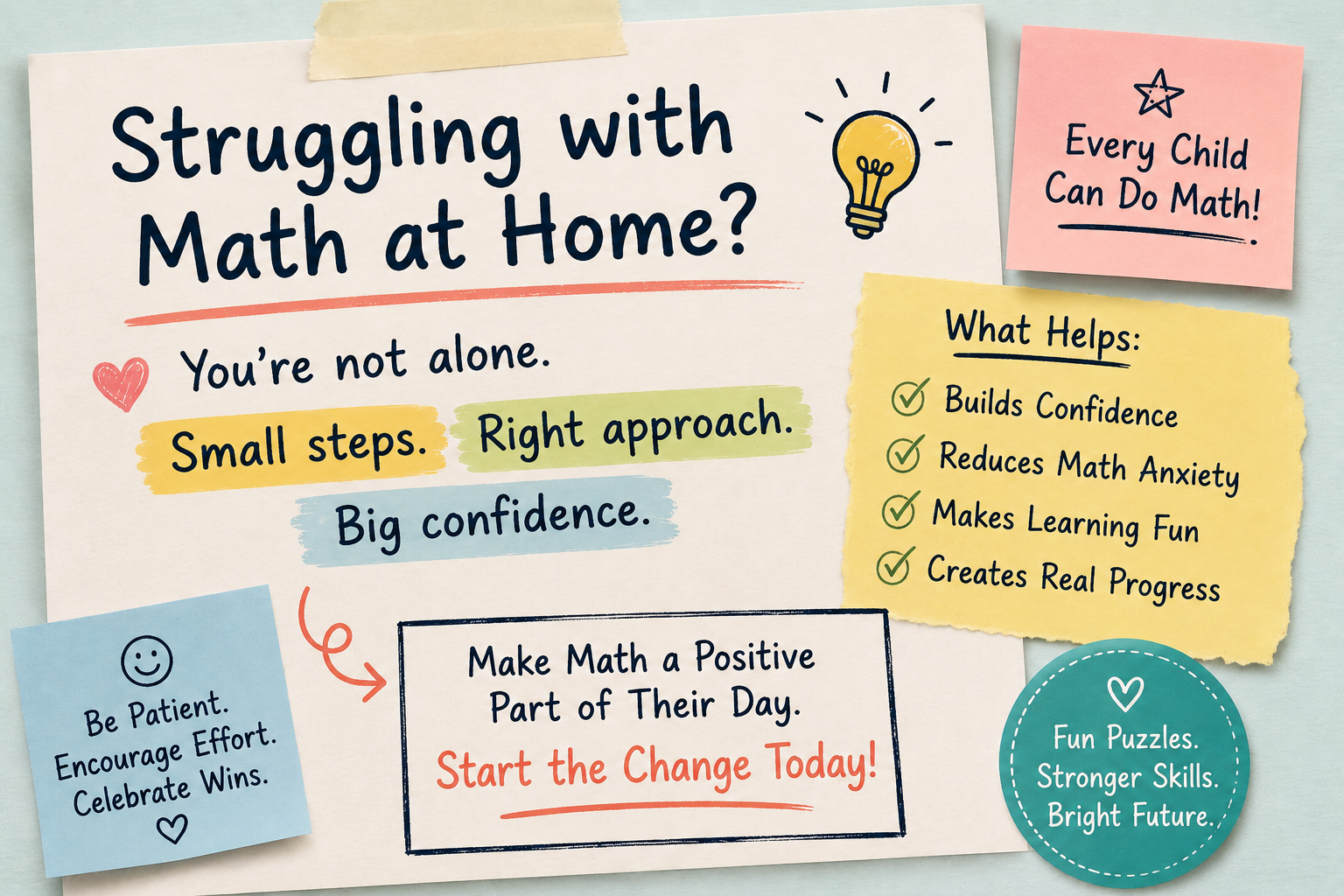
But many children do not have a knowledge gap. They have a confidence gap.
You cannot drill your way out of a confidence problem. You need a different approach.
Strategy 1: Make It Feel Like a Game, Not a Test
Games have challenges, attempts and levels. Tests have consequences. The maths may be identical, but the emotional experience is completely different.
CrossMath puzzles work on exactly this principle. Instead of a page of equations, children get a puzzle to solve.
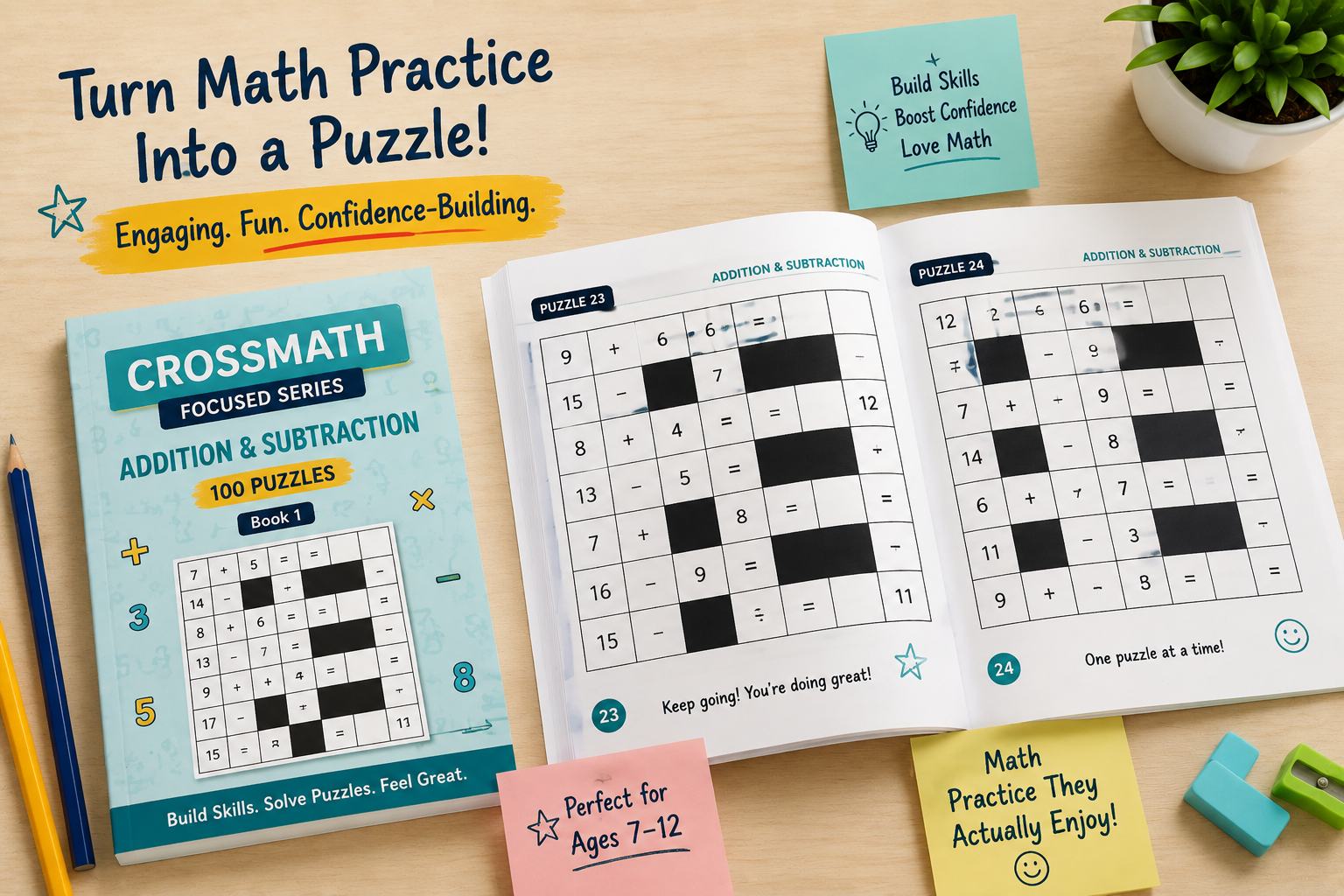
Turning maths practice into a puzzle changes the experience completely.
Our CrossMath Focused Series helps children practise specific operations while feeling like they are solving challenges rather than completing assignments.
Strategy 2: Ditch the Timer
Timed maths tests are one of the fastest ways to create maths anxiety.
At home, remove the timer entirely. Let children work at their own pace. Speed often follows confidence. Confidence rarely follows speed.
Strategy 3: Let Them Choose the Starting Point
Children are more invested when they have ownership. Let them choose which puzzle to start with, when to practise, or which book to work through first.
Choice creates motivation. Motivation creates consistency.
Strategy 4: Separate Practice from Assessment
Practice and assessment are not the same thing.
During practice, children should feel safe to make mistakes. Mistakes are information, not evidence of failure.
Books with solutions allow children to self-correct without feeling judged.
Strategy 5: Talk About Maths Like You Talk About Reading
Avoid phrases like “I was never good at maths” or “Some people just aren't maths people.”
Instead, treat maths as a skill that improves through exposure and practice, just like reading.
Strategy 6: Use Puzzles as the Entry Point to Harder Topics
Puzzles often reveal where the real learning gaps are.
A child who is comfortable with addition but struggles with mixed operations is showing a specific skill gap, not a lack of ability.
Puzzle books can reveal strengths and learning gaps without the pressure of a test.
The CrossMath Focused Series helps isolate and strengthen individual operations, while 1000 Math Crossword Puzzles for Kids 8-12 provides a broader challenge across multiple operations.
Strategy 7: Celebrate the Process, Not Just the Answer
Children praised for effort develop a healthier relationship with challenge than children praised only for results.
Celebrate persistence, curiosity and problem-solving, not just correctness.
The Bigger Picture
Maths confidence is built through hundreds of small moments: a puzzle completed after dinner, a grid solved during a journey, or a tricky problem finally figured out on a Sunday morning.
The goal is not to make children love maths overnight. The goal is to make maths feel approachable.
Puzzles are powerful because they are engaging, challenging and rewarding without feeling like formal assessment.
Where to Start
Start small. One book. One puzzle. Fifteen minutes.
For a broader challenge, try 1000 Math Crossword Puzzles for Kids 8-12.
You can also try our free daily puzzles before choosing a book.
Browse all puzzle books at silicapuzzles.com/books or start solving today at silicapuzzles.com/play.